
How Predictive Analytics Cuts Equipment Downtime in Manufacturing
Revolutionizing Manufacturing: How Predictive Analytics Cuts Equipment Downtime
Table of Contents
- The High Cost of Unplanned Downtime and the Rise of Predictive Maintenance
- Leveraging IoT Sensors and Manufacturing AI for Superior Uptime
- Beyond Downtime: Comprehensive Benefits of Predictive Analytics
- Implementing Predictive Analytics: Step-by-Step Checklist
- Frequently Asked Questions
- Conclusion
Key Takeaways:
- Unplanned equipment downtime costs manufacturers billions annually, severely impacting productivity and profitability.
- Predictive maintenance, powered by IoT sensors and manufacturing AI, shifts operations from reactive fixes to proactive interventions.
- This approach significantly reduces maintenance costs, extends asset lifespan, and minimizes production interruptions.
- Beyond downtime, predictive analytics enhances safety, optimizes inventory, and improves overall operational efficiency.
Introduction
In the fast-paced world of manufacturing, every second of production counts. Unplanned equipment downtime is a pervasive and costly challenge, disrupting schedules, escalating repair expenses, and eroding profitability. Businesses constantly seek innovative solutions to maintain operational continuity and maximize asset utilization. This is where the power of predictive analytics comes into play, offering a revolutionary approach to equipment management. By harnessing advanced technologies, manufacturers can anticipate potential failures before they occur, transforming their maintenance strategies from reactive to proactive. IoTree is at the forefront of this transformation, empowering factories with intelligent solutions that leverage data to cut equipment downtime dramatically.
The High Cost of Unplanned Downtime and the Rise of Predictive Maintenance
Unplanned equipment downtime is a silent killer of productivity in manufacturing, directly impacting bottom lines and operational efficiency. The traditional "run-to-failure" or reactive maintenance approach often leads to catastrophic failures, requiring extensive repairs, costly spare parts, and significant production losses. This antiquated model fails to leverage the vast amounts of data that modern industrial equipment generates, leaving manufacturers vulnerable to unexpected disruptions. The shift towards predictive maintenance marks a paradigm change, promising a future where equipment failures are anticipated and mitigated proactively.
The financial implications of unplanned downtime are staggering across various industries. According to a report by Deloitte, unplanned downtime costs industrial manufacturers an estimated $50 billion annually worldwide, a figure that underscores the urgency for more effective maintenance strategies. Furthermore, studies by ARC Advisory Group indicate that unplanned downtime accounts for 5-20% of production capacity losses in manufacturing facilities, directly translating into missed targets and reduced output. These statistics highlight a critical need for solutions that can foresee and prevent these costly interruptions, ensuring continuous operation and optimized production flows.
Understanding the Spectrum of Maintenance Strategies
To fully appreciate the value of predictive maintenance, it’s essential to understand its place within the broader spectrum of maintenance strategies. For decades, industries have grappled with the trade-offs between various approaches, each with its own set of advantages and disadvantages. The evolution from basic reactive fixes to sophisticated data-driven predictions showcases technological advancements aimed at maximizing asset performance and minimizing operational risks.
"Preventive Maintenance: Maintenance performed at pre-determined intervals or according to prescribed criteria, intended to reduce the probability of failure or the degradation of the functioning of an item."
Reactive maintenance, often called "run-to-failure," involves repairing equipment only after it has broken down. While seemingly cost-effective in the short term by avoiding upfront planning, it inevitably leads to higher costs due to emergency repairs, expedited shipping for parts, and significant production losses. Preventive maintenance, a step forward, involves scheduled inspections and maintenance based on time or usage. This approach reduces sudden failures but can lead to unnecessary maintenance on healthy equipment or, conversely, may not catch failures that develop between scheduled checks.
Condition-based maintenance (CBM) represents an intermediate step, monitoring the actual condition of assets to determine when maintenance is needed. This is often done through periodic inspections or basic sensor readings. Predictive maintenance takes CBM to the next level by using advanced analytics, machine learning, and continuous data streams from IoT sensors to forecast potential failures with high accuracy, allowing for just-in-time maintenance. This precision minimizes downtime, optimizes maintenance schedules, and extends the useful life of critical assets.
The Financial Drain of Reactive Approaches
The true cost of reactive maintenance extends far beyond the immediate repair bill. It encompasses a cascade of negative effects that ripple through the entire manufacturing operation. One major impact is the significant loss in productivity. When a critical machine goes down unexpectedly, the entire production line can grind to a halt, leading to missed deadlines and unfulfilled orders. A study by PwC revealed that over 80% of industrial facilities experience at least one unplanned downtime event per year, underscoring the ubiquity of this problem.
Consider the automotive industry, where production lines are highly integrated and operate on tight schedules. A single hour of downtime for a critical piece of machinery can cost automotive manufacturers upwards of $1.3 million, as reported by industry analyses based on figures from major players like Ford. Such figures highlight the immense pressure on manufacturers to minimize any interruptions. This financial burden includes not only lost production but also increased labor costs for emergency repairs, potential damage to other interconnected equipment, and a decline in product quality due to rushed processes or compromised conditions.
| Feature | Reactive Maintenance | Predictive Maintenance |
| Approach | Fixes after failure | Forecasts and prevents failure |
| Downtime | High, unplanned | Low, planned, minimized |
| Maintenance Cost | High (emergency repairs) | Lower (optimized scheduling, fewer breakdowns) |
| Asset Lifespan | Shorter (stress from failures) | Longer (proactive care, reduced wear and tear) |
| Data Utilization | Minimal | Extensive (IoT sensors, AI/ML analytics) |
| Operational Impact | Disruptive, unpredictable | Smooth, predictable, optimized |
The shift to predictive maintenance is not merely an operational upgrade; it's a strategic imperative for financial health and competitive advantage. Implementing predictive maintenance can lead to a substantial reduction in overall maintenance costs, with McKinsey reporting potential reductions of 10-40%. Furthermore, it can extend the lifespan of assets by 20% or more, a benefit highlighted by companies like General Electric that have adopted these advanced strategies. By moving away from costly reactive fixes, manufacturers can unlock significant savings and achieve unprecedented levels of operational efficiency.
Leveraging IoT Sensors and Manufacturing AI for Superior Uptime
The core of effective predictive maintenance lies in its ability to gather, process, and interpret vast amounts of real-time data from industrial equipment. This capability is made possible by the powerful combination of Internet of Things (IoT) sensors and advanced manufacturing AI. These technologies work in tandem to create an intelligent ecosystem that continuously monitors asset health, detects anomalies, and predicts potential failures long before they manifest as critical issues. The insights derived from this data-driven approach are invaluable for maintaining superior uptime and optimizing production processes.
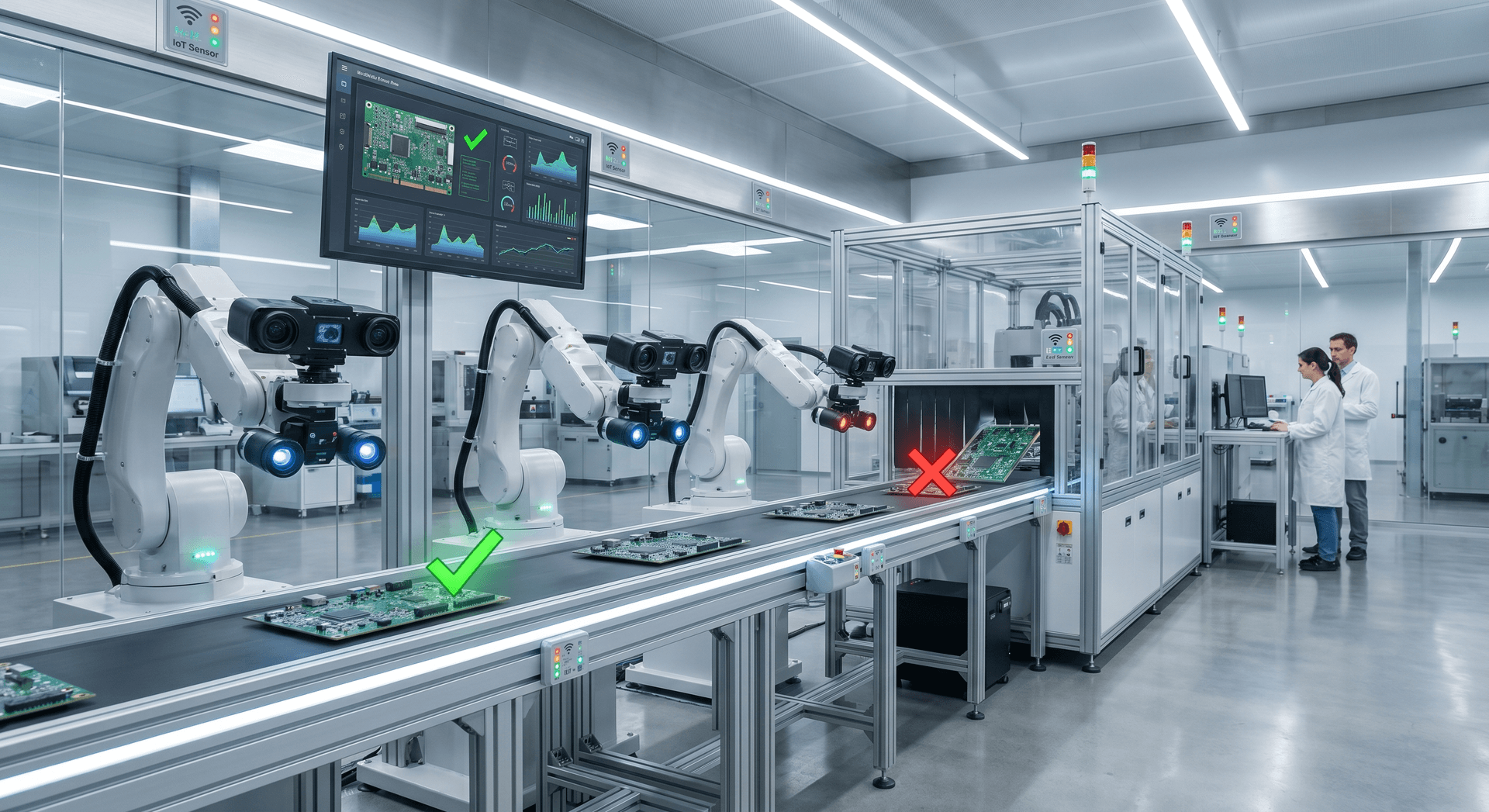
The integration of IoT sensors into manufacturing environments transforms traditional machinery into smart, connected assets. These sensors act as the eyes and ears of the predictive maintenance system, constantly collecting critical operational data. This raw data, however, is merely a collection of numbers without the intelligence to interpret it. This is where manufacturing AI, specifically machine learning algorithms, comes into play. AI processes and analyzes these complex datasets, identifying patterns and deviations that human operators might miss, thereby enabling accurate and timely predictions of equipment health.
The Role of IoT Sensors in Data Collection
IoT sensors are the foundational layer of any robust predictive maintenance system. These small, often wireless, devices are strategically placed on critical machinery to monitor key performance indicators (KPIs) in real-time. The variety of sensors available allows for a comprehensive assessment of equipment health, covering a wide range of potential failure modes. For instance, vibration sensors are crucial for detecting imbalances, misalignments, or bearing wear in rotating machinery, which are common precursors to mechanical failure.
Temperature sensors monitor heat levels in motors, bearings, and electrical components, identifying overheating issues that could lead to breakdowns or reduced efficiency. Acoustic sensors can pick up subtle changes in sound signatures, indicating anomalies like loose parts, leaks, or grinding noises that signal impending problems. Other sensor types include current sensors for monitoring electrical load fluctuations, pressure sensors for hydraulic systems, and even optical sensors for detecting wear or damage on surfaces. The continuous stream of data from these IoT sensors provides an unprecedented level of visibility into the operational state of equipment. This constant monitoring ensures that even minor deviations from normal operating parameters are captured, providing the necessary input for subsequent AI analysis.
How Manufacturing AI Transforms Raw Data into Actionable Insights
Once the IoT sensors have collected the raw operational data, manufacturing AI steps in to transform this deluge of information into actionable insights. This process involves sophisticated machine learning algorithms that are trained on historical data, including past failures, maintenance records, and operational parameters. These algorithms learn to recognize the "normal" operating signature of each piece of equipment and identify anomalies that signal a deviation from this baseline. The power of AI lies in its ability to detect subtle patterns and correlations in complex datasets that are beyond human cognitive capabilities.
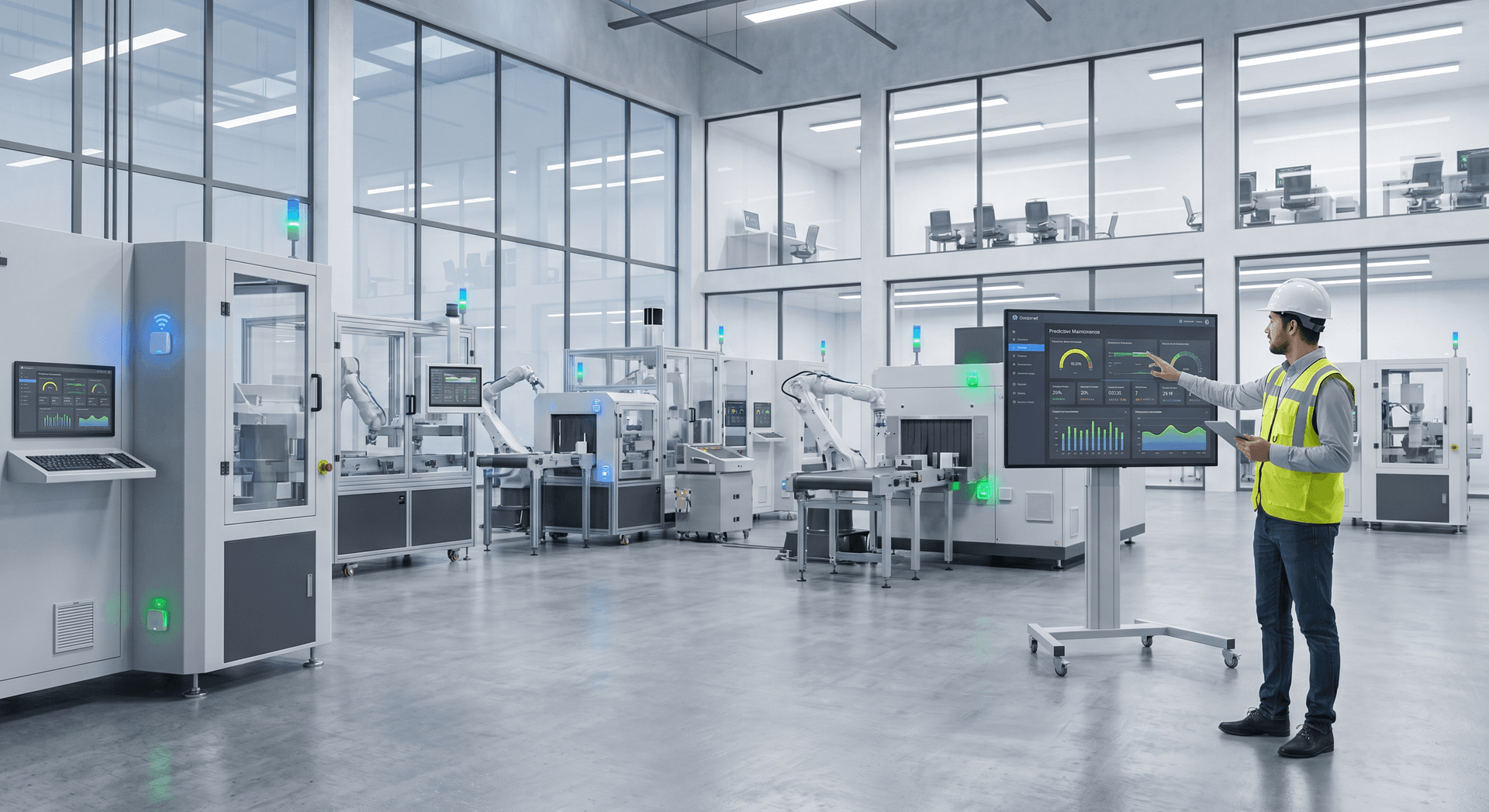
For example, an AI model might correlate a slight increase in vibration with a gradual rise in temperature and a specific change in current draw, predicting a bearing failure several weeks in advance. This multi-variate analysis is far more effective than relying on single-parameter thresholds. Advanced AI techniques, such as deep learning and neural networks, can even identify novel failure modes or anticipate issues in complex, interconnected systems. When the AI detects a potential problem, it generates an alert, often with a probability score and a recommended action, such as scheduling maintenance, ordering a specific part, or further investigation. This capability allows maintenance teams to transition from reactive repairs to planned interventions, optimizing resource allocation and minimizing unexpected disruptions.
Beyond Downtime: Comprehensive Benefits of Predictive Analytics
While cutting equipment downtime is a primary objective, the implementation of predictive analytics in manufacturing yields a multitude of additional benefits that extend far beyond simply keeping machines running. These advantages encompass various aspects of operations, from optimizing resource allocation and inventory management to significantly enhancing safety and ensuring regulatory compliance. By fostering a data-driven culture, predictive analytics transforms manufacturing processes, leading to more efficient, safer, and ultimately more profitable enterprises.
The holistic impact of predictive analytics creates a ripple effect across the entire organization. Improved reliability translates into higher output, better product quality, and increased customer satisfaction. The ability to predict and prevent failures also empowers management with greater control over their assets and production schedules, enabling more strategic decision-making. This comprehensive approach ensures that investments in technologies like IoT sensors and manufacturing AI deliver maximum value, positioning businesses for long-term success in a competitive global market.
Optimizing Resource Allocation and Inventory Management
One significant benefit of predictive analytics is its ability to optimize the allocation of maintenance resources. Traditional maintenance schedules often lead to either over-maintenance (performing unnecessary tasks on healthy equipment) or under-maintenance (allowing equipment to degrade until failure). With predictive insights, maintenance teams can schedule interventions precisely when they are needed, minimizing labor costs and ensuring technicians are deployed efficiently. This "just-in-time" maintenance approach means fewer hours spent on routine checks of perfectly healthy machines and more focused efforts on critical assets showing early signs of distress.
Furthermore, predictive analytics revolutionizes spare parts inventory management. Without predictive capabilities, manufacturers often resort to either holding excessive inventory of critical parts (tying up capital and storage space) or risking stockouts during emergency repairs (leading to extended downtime). By accurately forecasting potential failures, predictive maintenance systems can provide precise lead times for necessary parts. This enables businesses to order components exactly when they are needed, reducing inventory holding costs by up to 20-50%, as observed in companies adopting advanced supply chain analytics. It also minimizes the risk of production delays due to unavailable parts, creating a more lean and responsive supply chain.
Enhancing Safety and Regulatory Compliance
Equipment failures are not just costly; they can also pose significant safety risks to personnel. Malfunctioning machinery, sudden breakdowns, or undetected structural weaknesses can lead to accidents, injuries, or even fatalities. Predictive analytics plays a crucial role in enhancing workplace safety by identifying potential hazards before they escalate. By monitoring equipment health continuously, the system can flag components nearing failure, such as compromised structural integrity in a crane or overheating in a high-voltage motor. This early warning allows for timely intervention, preventing dangerous situations and protecting employees.
In addition to direct safety improvements, predictive analytics also aids in meeting stringent regulatory compliance standards. Many industries operate under strict regulations regarding equipment maintenance, operational safety, and environmental impact. For instance, the EPA often sets guidelines for emissions and operational efficiency in industrial plants. By providing detailed, auditable records of equipment performance, maintenance activities, and predictive alerts, manufacturers can demonstrate adherence to these regulations more easily and comprehensively. This proactive approach to maintenance not only reduces the likelihood of non-compliance fines but also fosters a safer, more responsible operational environment, enhancing the company's reputation and reducing liability risks.
Implementing Predictive Analytics: Step-by-Step Checklist
Successfully implementing predictive analytics for equipment uptime requires a structured approach, moving from initial assessment to continuous optimization. This checklist provides a practical roadmap for manufacturers looking to integrate these advanced solutions into their operations.
- Assess Current State and Define Objectives: Begin by evaluating your existing maintenance strategy, identifying critical assets, and pinpointing the most common causes and costs of unplanned downtime. Clearly define your goals, such as reducing downtime by X%, cutting maintenance costs by Y%, or improving asset lifespan by Z years. This initial assessment helps prioritize efforts and establish measurable KPIs.
- Identify Critical Assets and Data Points: Focus on the machinery that is most vital to your production process and whose failure would cause the greatest disruption or safety risk. Determine which specific parameters (vibration, temperature, pressure, current, etc.) are most indicative of potential failure for each asset. This step guides sensor selection and placement.
- Deploy IoT Sensors and Data Infrastructure: Install appropriate IoT sensors on your chosen critical assets. Ensure robust connectivity (Wi-Fi, cellular, LoRaWAN) to reliably transmit data to a central platform. Establish a secure data infrastructure, either cloud-based or on-premise, capable of ingesting, storing, and processing large volumes of real-time sensor data.
- Integrate Data and Develop/Train AI Models: Connect your sensor data streams with an analytics platform. Integrate historical data (maintenance logs, failure records, operational parameters) to enrich the dataset. Develop or deploy pre-built machine learning models, training them on your integrated data to learn normal operating patterns and identify anomalies indicative of impending failures.
- Establish Alerting, Visualization, and Workflow Integration: Configure the predictive analytics system to generate alerts when potential failures are detected, notifying relevant personnel (e.g., maintenance managers, technicians) via dashboards, email, or mobile apps. Implement intuitive data visualization tools to display asset health and performance trends. Integrate these insights into your existing Computerized Maintenance Management System (CMMS) or Enterprise Asset Management (EAM) software to streamline maintenance workflows.
- Monitor, Refine, and Scale: Continuously monitor the performance of your predictive models and the effectiveness of your maintenance actions. Gather feedback from technicians and refine models based on new data and insights. Start with a pilot program on a few critical assets, then gradually scale the solution across more equipment and production lines as you achieve success and gain confidence.
Frequently Asked Questions
What is predictive maintenance and how does it differ from preventive maintenance? Predictive maintenance uses real-time data from IoT sensors and AI to forecast equipment failures before they occur, allowing for just-in-time repairs. Preventive maintenance, conversely, involves scheduled maintenance at fixed intervals, regardless of the equipment's actual condition, which can lead to unnecessary interventions or missed issues between checks.
How do IoT sensors contribute to cutting equipment downtime? IoT sensors continuously collect vital operational data (e.g., vibration, temperature, pressure) from machinery. This real-time data feeds into AI algorithms, which analyze it for anomalies and patterns indicative of impending failure. By providing early warnings, sensors enable proactive maintenance, significantly reducing unplanned downtime.
What kind of data does manufacturing AI use for predictive analytics? Manufacturing AI utilizes a diverse range of data, including real-time sensor data (vibration, temperature, acoustic), historical maintenance records, equipment specifications, operational parameters, and environmental conditions. AI algorithms process this complex data to identify subtle patterns and predict potential equipment failures with high accuracy.
What are the main benefits of predictive analytics for small and medium-sized manufacturers? For SMEs, predictive analytics offers substantial benefits like reduced maintenance costs, minimized production disruptions, extended equipment lifespan, and improved operational efficiency. It allows them to compete more effectively by optimizing asset performance without requiring extensive in-house data science teams, often through accessible cloud-based solutions.
How long does it typically take to implement a predictive analytics solution? The implementation timeline for a predictive analytics solution can vary. A pilot program focusing on a few critical assets might take 3-6 months from sensor deployment to initial insights. Full-scale integration across an entire facility can take 12-18 months, depending on the complexity of the existing infrastructure and the number of assets involved.
Conclusion
The era of reactive maintenance is rapidly drawing to a close, replaced by a sophisticated, data-driven approach that champions foresight over hindsight. Predictive analytics, powered by the synergy of IoT sensors and manufacturing AI, offers an unparalleled opportunity for manufacturers to dramatically cut equipment downtime, optimize operational costs, and secure a significant competitive edge. By transforming maintenance from an unpredictable expense into a strategic advantage, businesses can ensure continuous production, enhance safety, and unlock new levels of efficiency. Explore IoTree AI solutions for your business and embark on a journey towards intelligent, uninterrupted manufacturing.
{
  "@context": "https://schema.org",
  "@type": "FAQPage",
  "mainEntity": [
    {
      "@type": "Question",
      "name": "What is predictive maintenance and how does it differ from preventive maintenance?",
      "acceptedAnswer": {
        "@type": "Answer",
        "text": "Predictive maintenance uses real-time data from IoT sensors and AI to forecast equipment failures before they occur, allowing for just-in-time repairs. Preventive maintenance, conversely, involves scheduled maintenance at fixed intervals, regardless of the equipment's actual condition, which can lead to unnecessary interventions or missed issues between checks."
      }
    },
    {
      "@type": "Question",
      "name": "How do IoT sensors contribute to cutting equipment downtime?",
      "acceptedAnswer": {
        "@type": "Answer",
        "text": "IoT sensors continuously collect vital operational data (e.g., vibration, temperature, pressure) from machinery. This real-time data feeds into AI algorithms, which analyze it for anomalies and patterns indicative of impending failure. By providing early warnings, sensors enable proactive maintenance, significantly reducing unplanned downtime."
      }
    },
    {
      "@type": "Question",
      "name": "What kind of data does manufacturing AI use for predictive analytics?",
      "acceptedAnswer": {
        "@type": "Answer",
        "text": "Manufacturing AI utilizes a diverse range of data, including real-time sensor data (vibration, temperature, acoustic), historical maintenance records, equipment specifications, operational parameters, and environmental conditions. AI algorithms process this complex data to identify subtle patterns and predict potential equipment failures with high accuracy."
      }
    },
    {
      "@type": "Question",
      "name": "What are the main benefits of predictive analytics for small and medium-sized manufacturers?",
      "acceptedAnswer": {
        "@type": "Answer",
        "text": "For SMEs, predictive analytics offers substantial benefits like reduced maintenance costs, minimized production disruptions, extended equipment lifespan, and improved operational efficiency. It allows them to compete more effectively by optimizing asset performance without requiring extensive in-house data science teams, often through accessible cloud-based solutions."
      }
    },
    {
      "@type": "Question",
      "name": "How long does it typically take to implement a predictive analytics solution?",
      "acceptedAnswer": {
        "@type": "Answer",
        "text": "The implementation timeline for a predictive analytics solution can vary. A pilot program focusing on a few critical assets might take 3-6 months from sensor deployment to initial insights. Full-scale integration across an entire facility can take 12-18 months, depending on the complexity of the existing infrastructure and the number of assets involved."
      }
    }
  ]
}